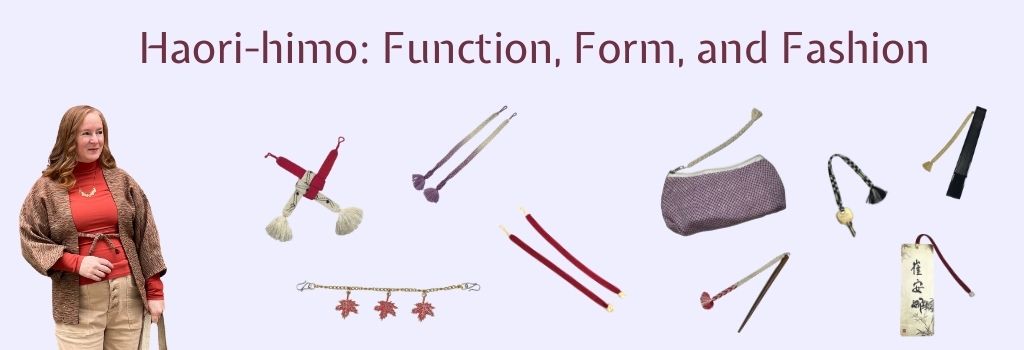
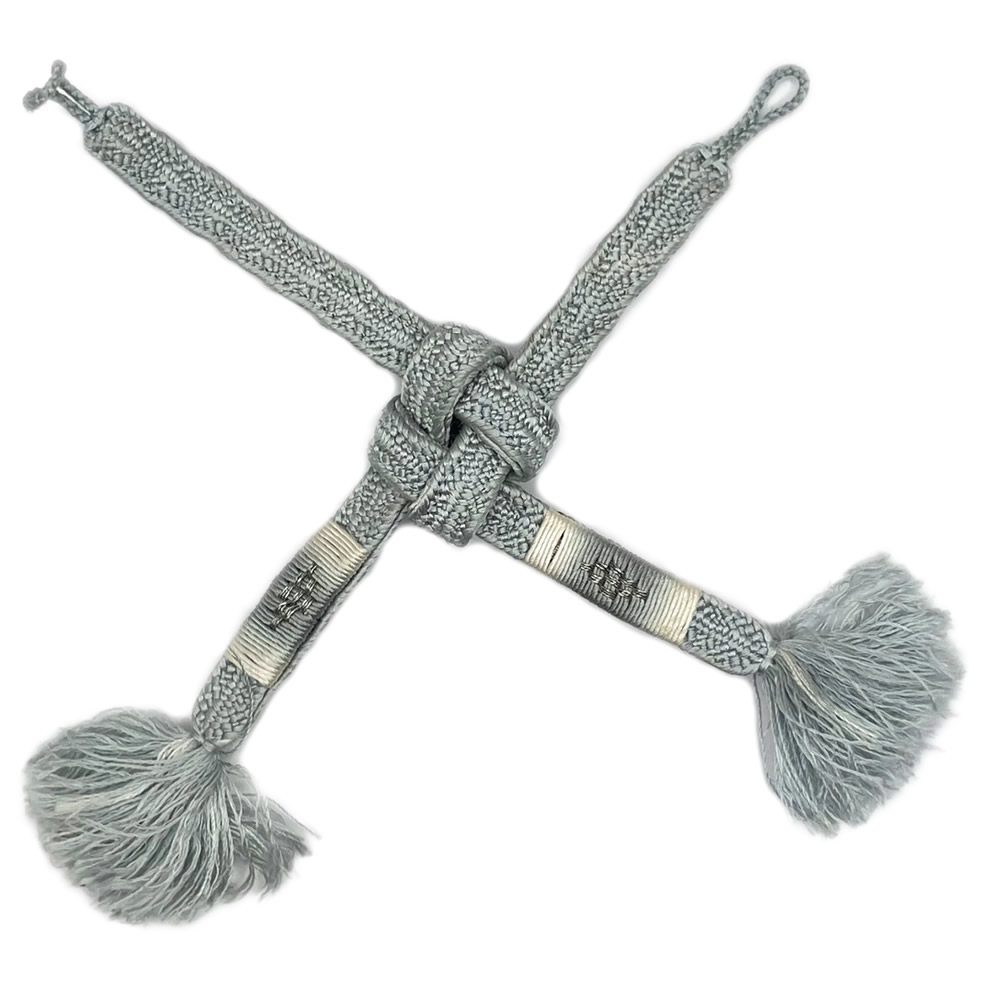
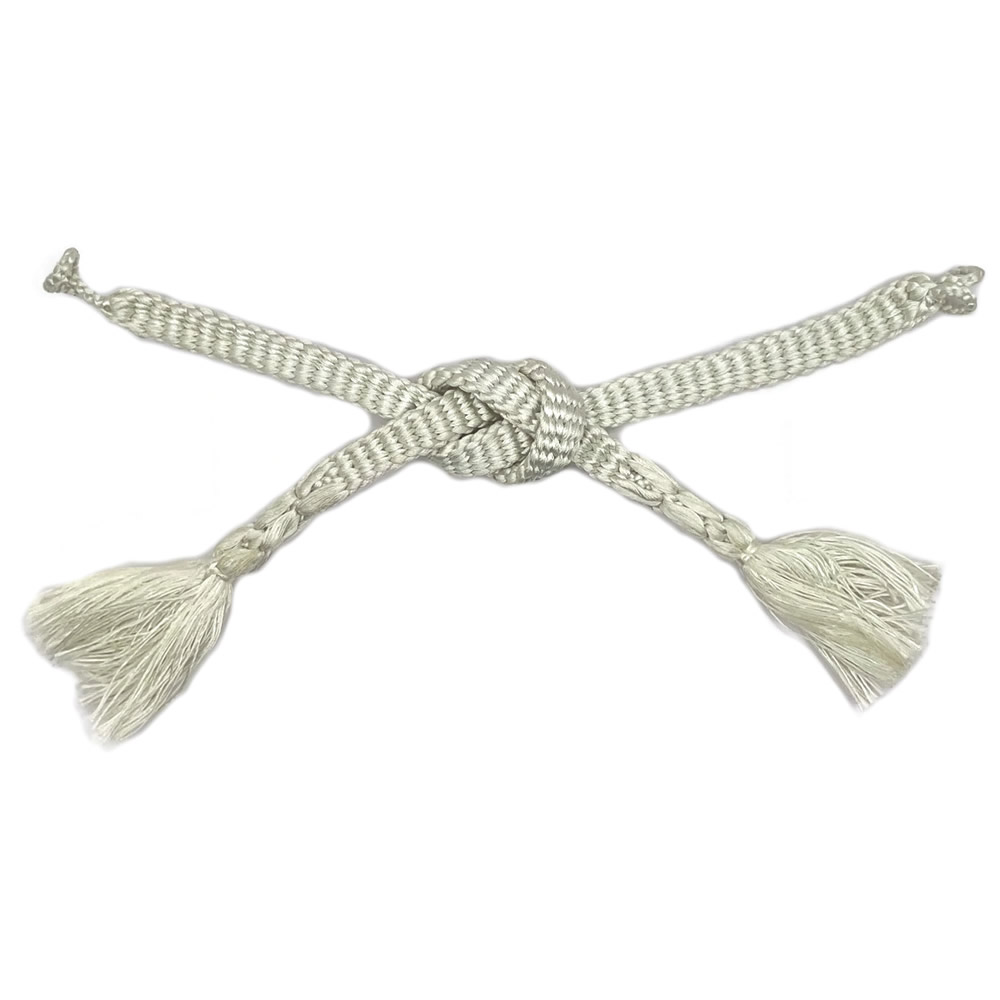
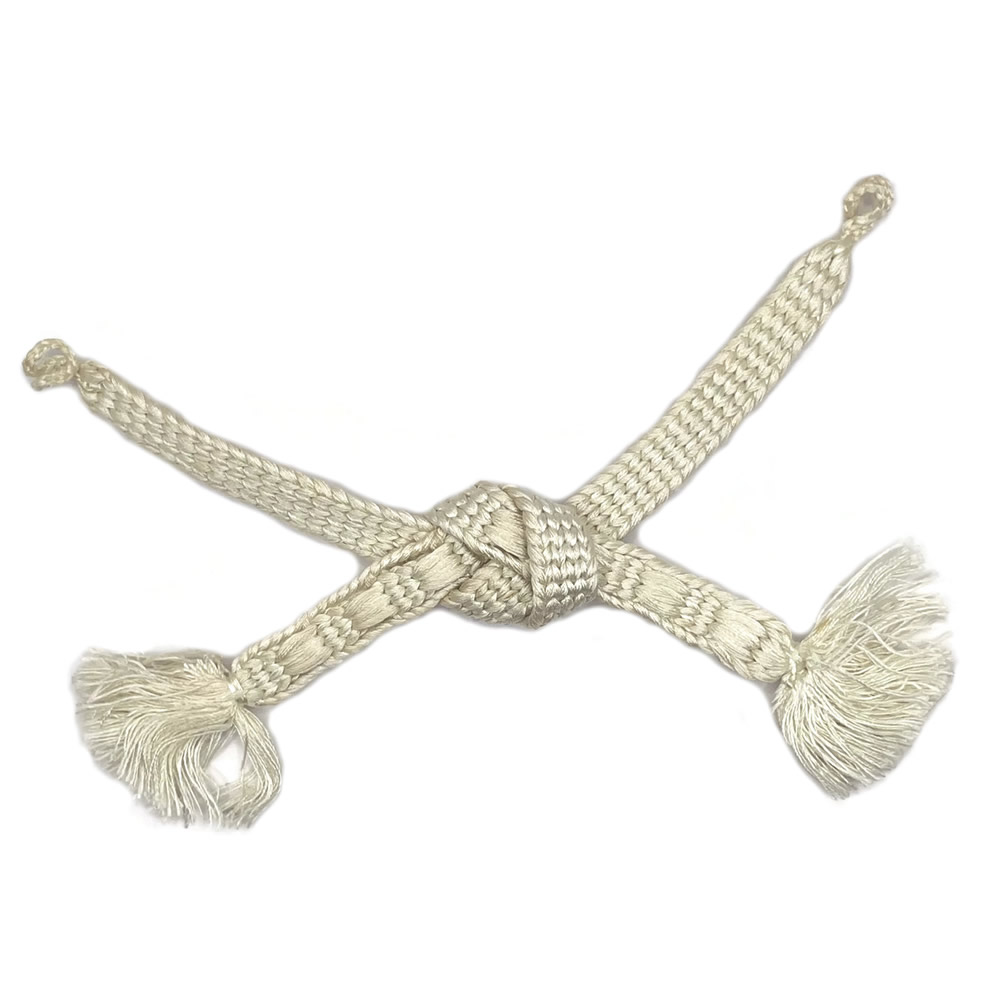
Haori-himo (羽織紐) are decorative braided silk cords or chains worn with a haori (羽織), the traditional Japanese jacket layered over kimono.
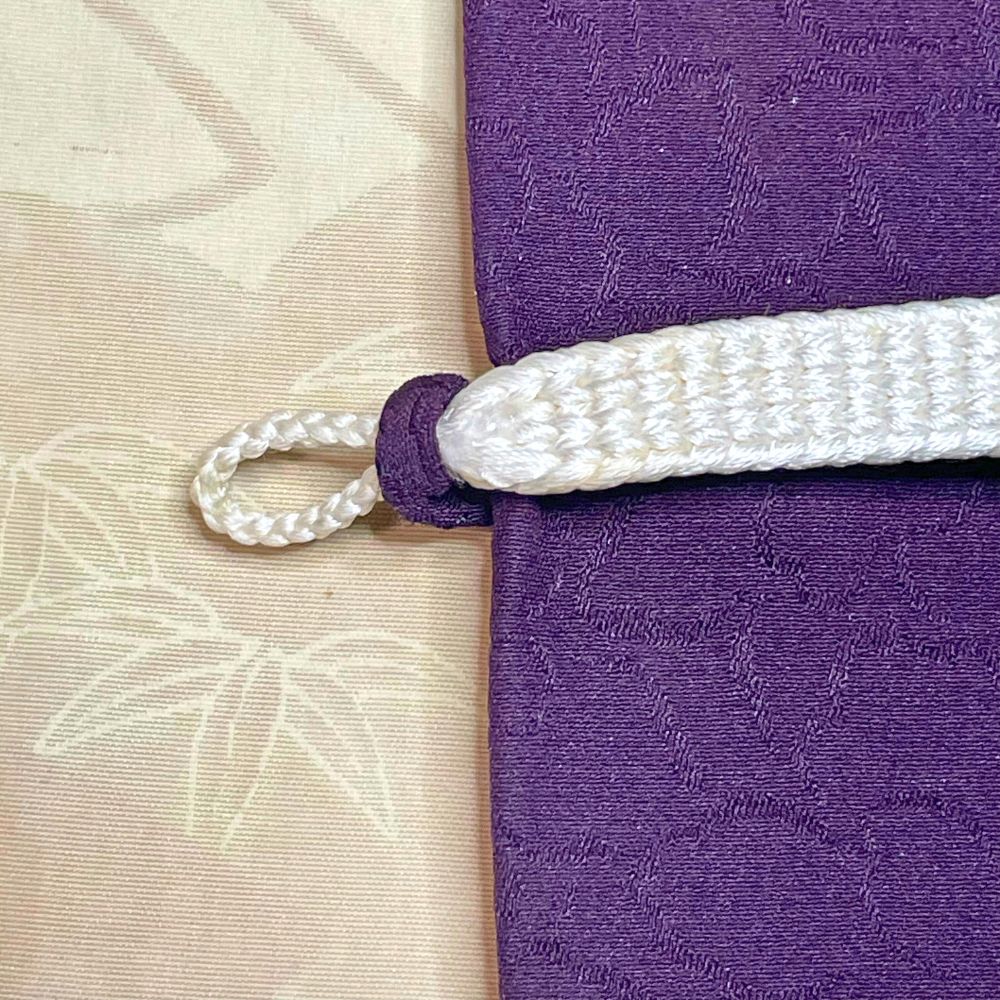
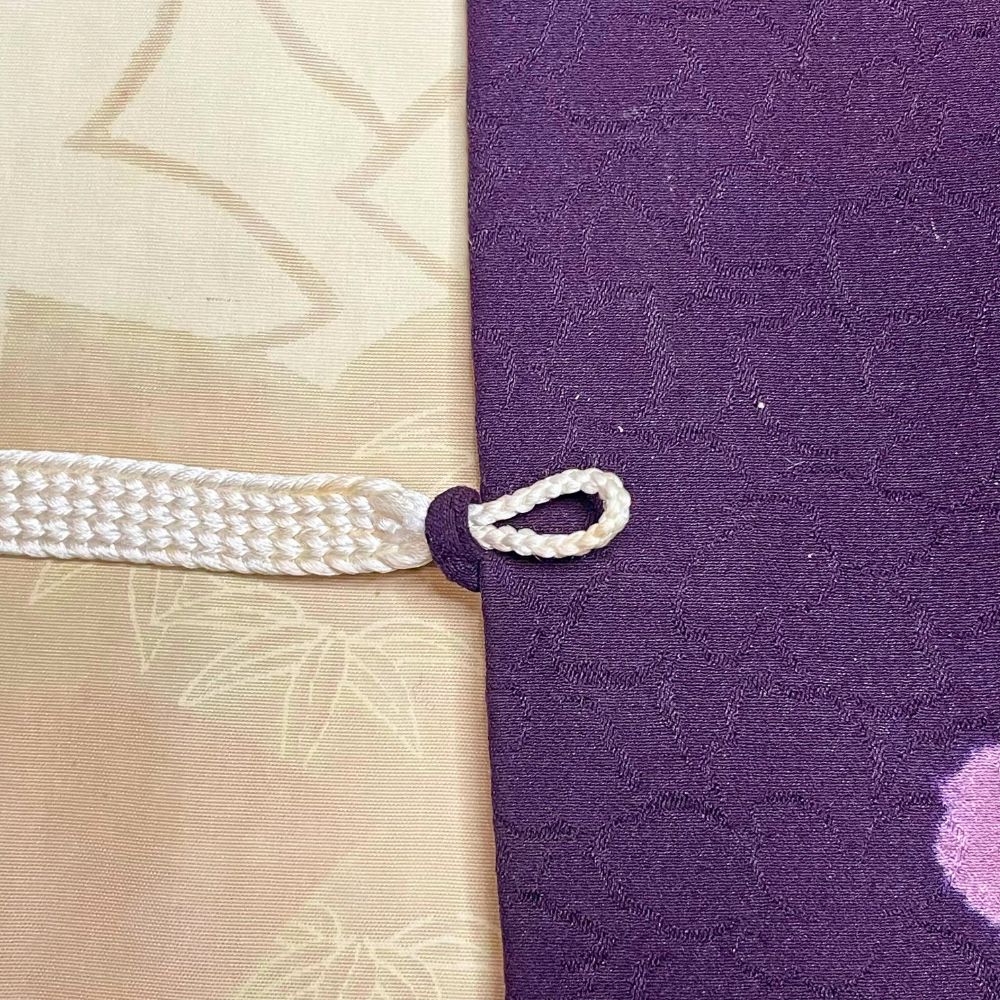
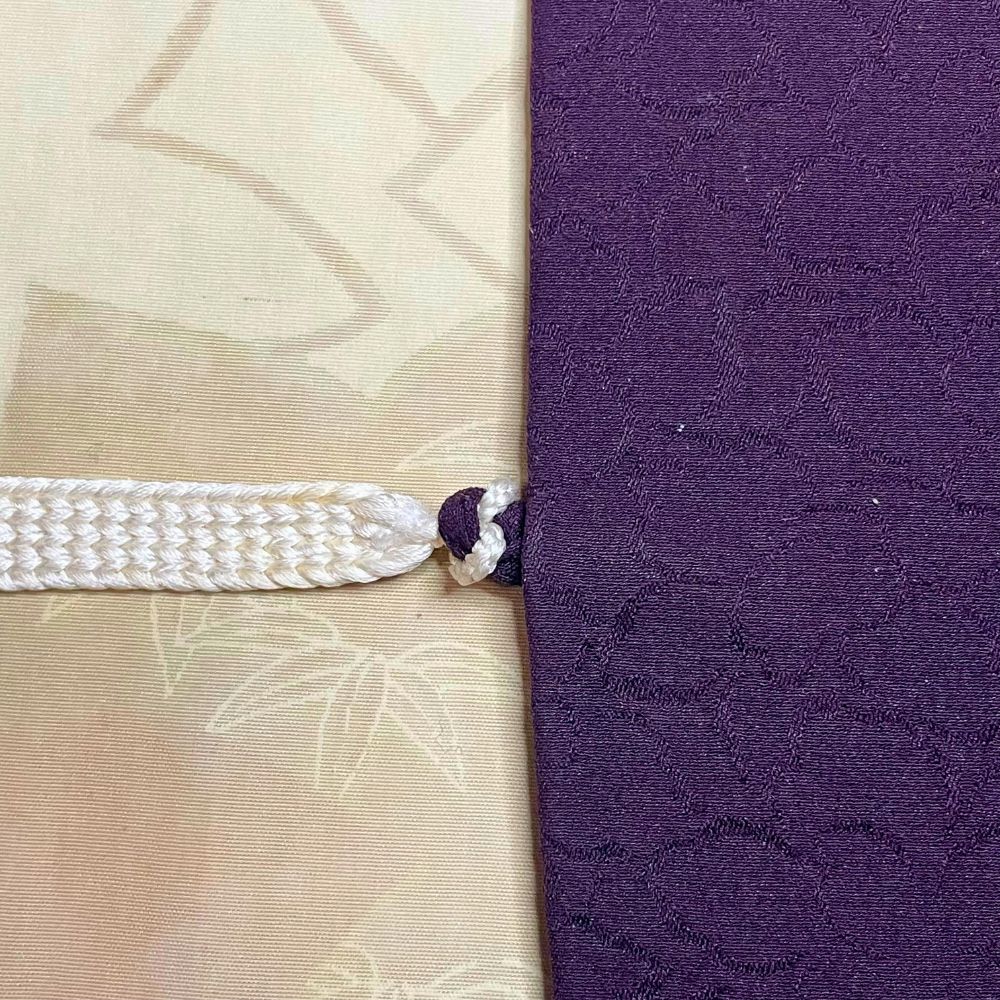
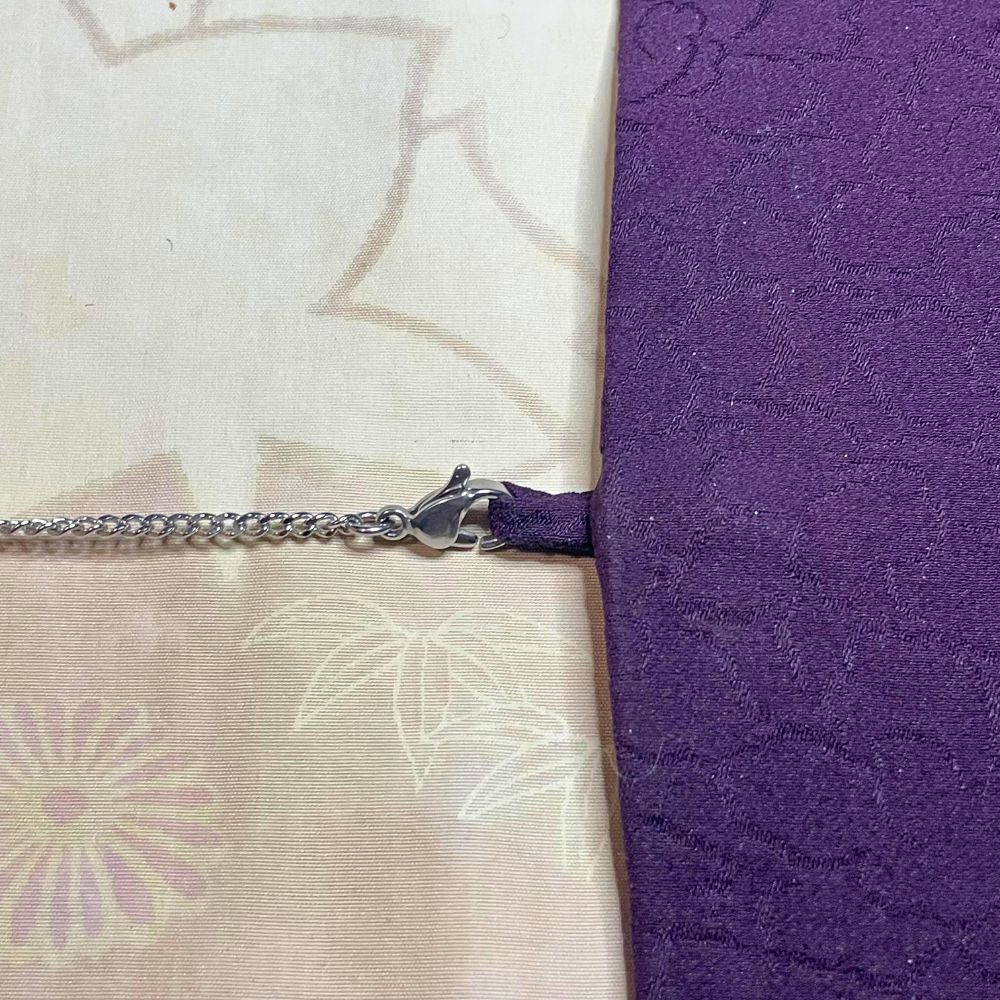
They attach to small loops, which are sewn into the inside seam on either side of the haori collar. The himo connects across the front, serving both as a functional closure and a stylish accessory.
Although they secure the jacket, they are typically worn loosely fastened, allowing the haori to drape naturally rather than being pulled tightly closed.
Form: What Haori-himo Are Made Of
Haori-himo range from understated and traditional to ornate and contemporary.
Traditional Silk Kumihimo
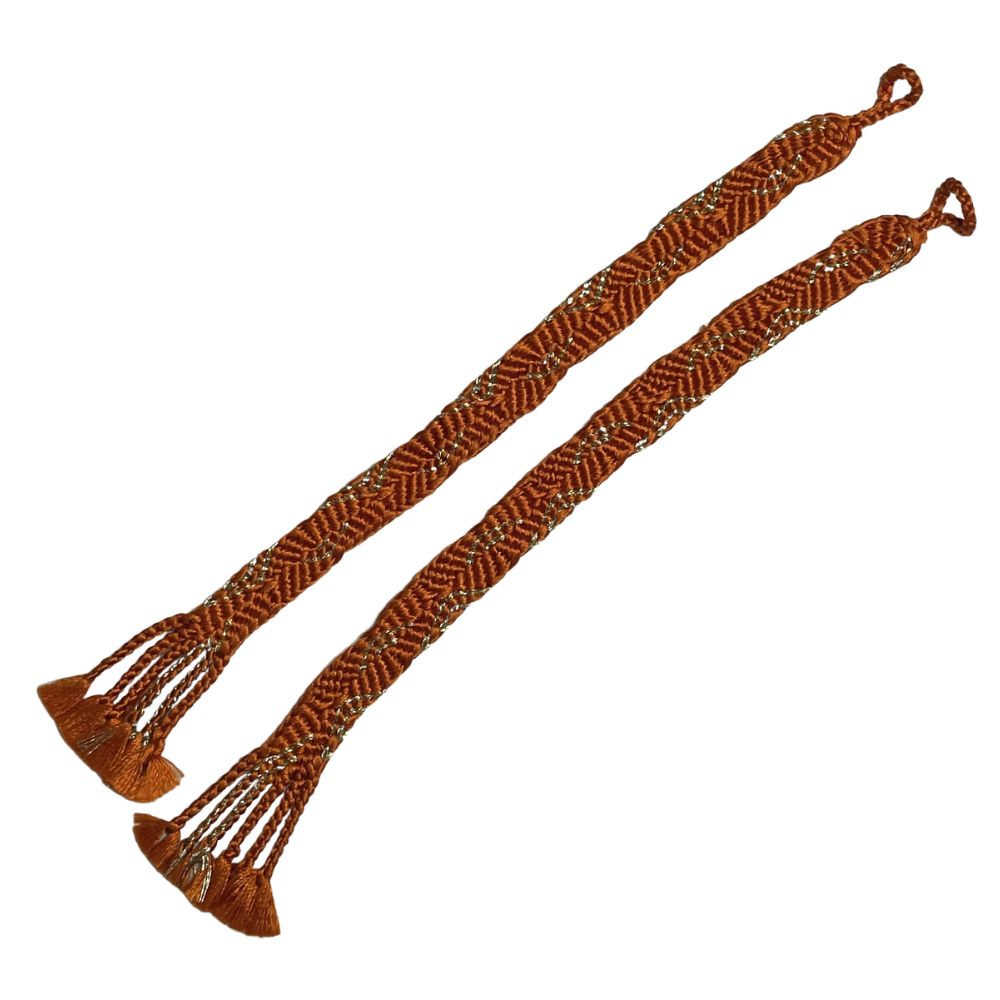
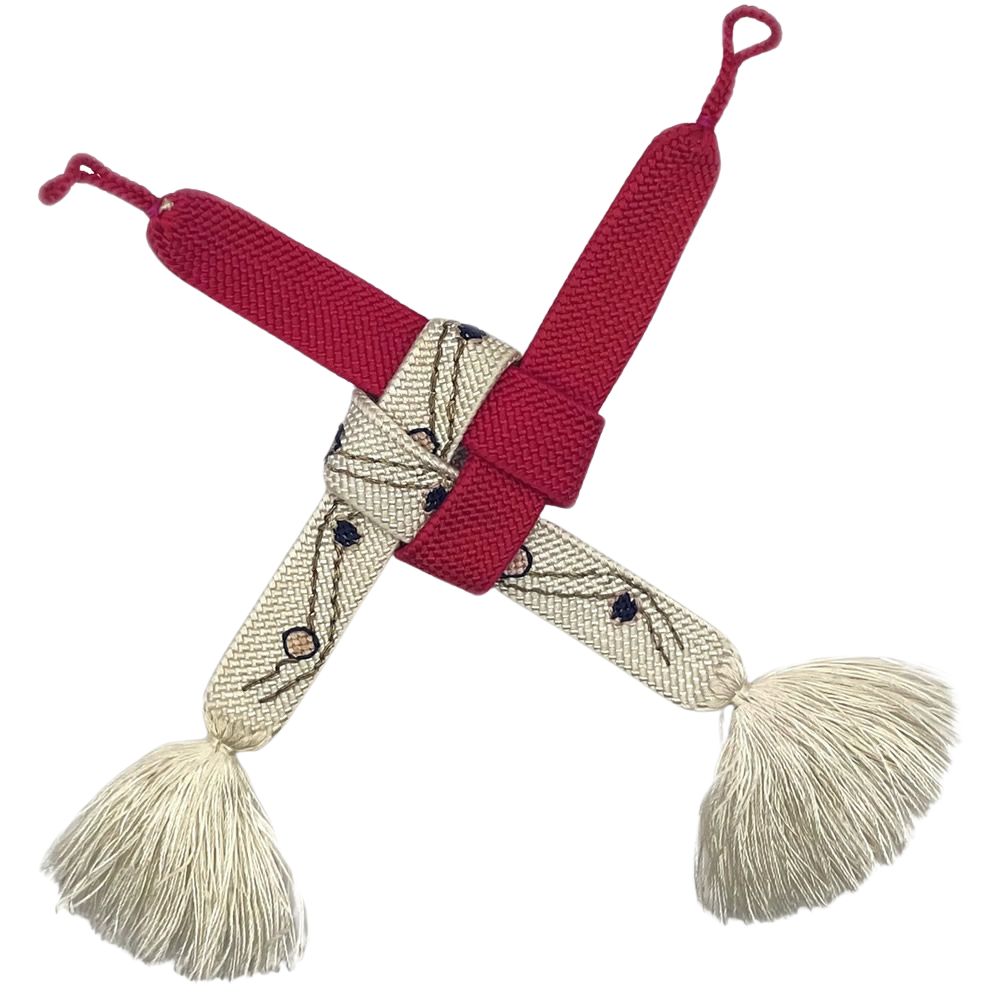
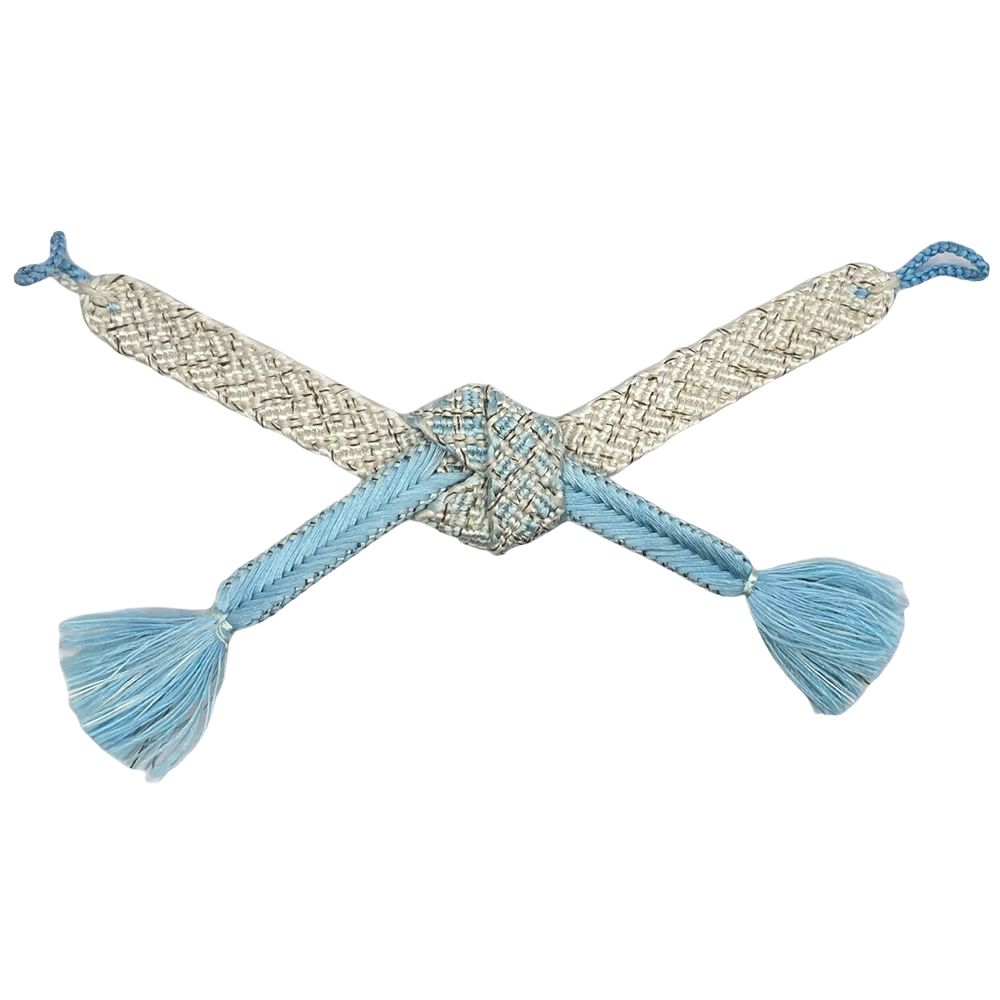
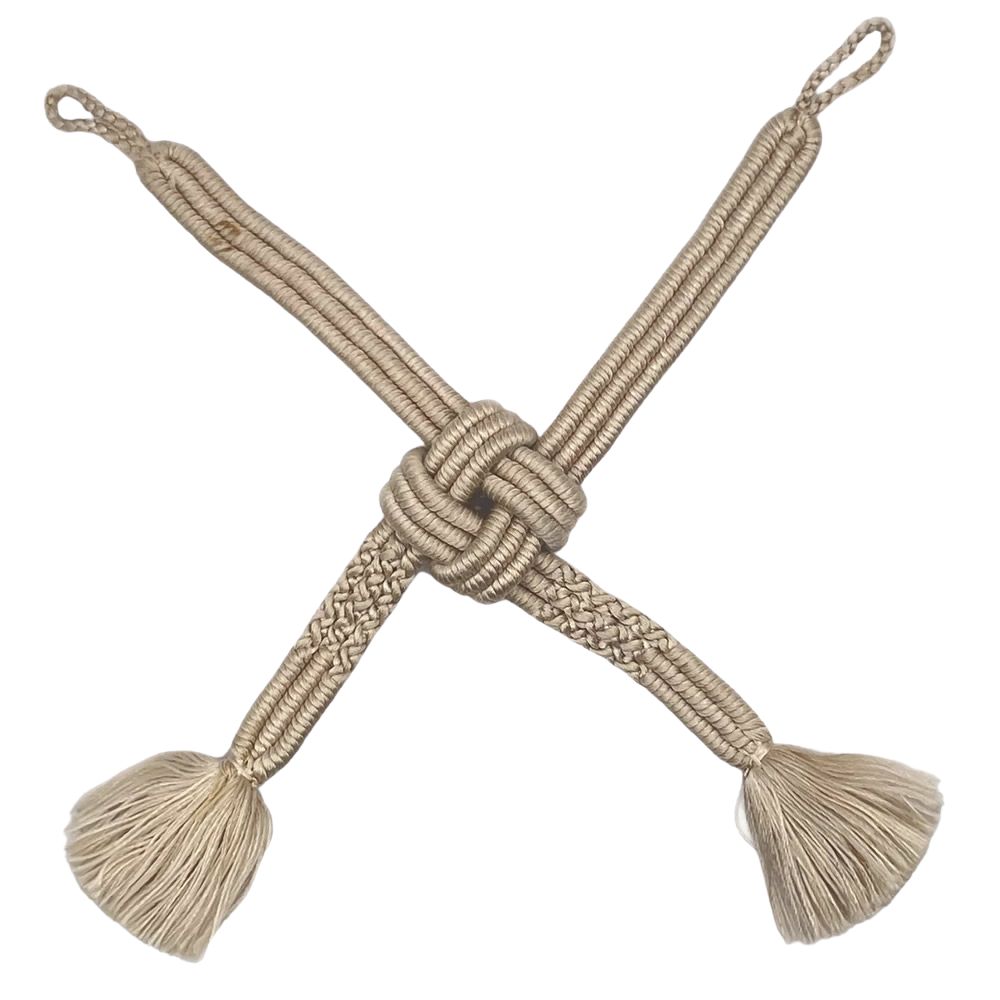
The most traditional form is made from kumihimo (組紐) — a Japanese braiding technique that produces strong, intricate silk cords.
Each silk cord has a looped end called the wa (輪). This loop is secured to the chi (乳) inside the haori collar.
Features:
Typically two matching or coordinating braided silk cords
Designed to be tied at the center
May attach directly to the chi
May include small S-shaped hooks for easier removal and interchange
These styles are elegant, balanced, and timeless — ideal for classically styled ensembles.
Modern Chain & Decorative Styles
Contemporary designs reinterpret haori-himo with mixed materials and jewelry-inspired elements.
Glass beads, pearls, natural stones, or gemstone accents
Hybrid cord-and-chain constructions
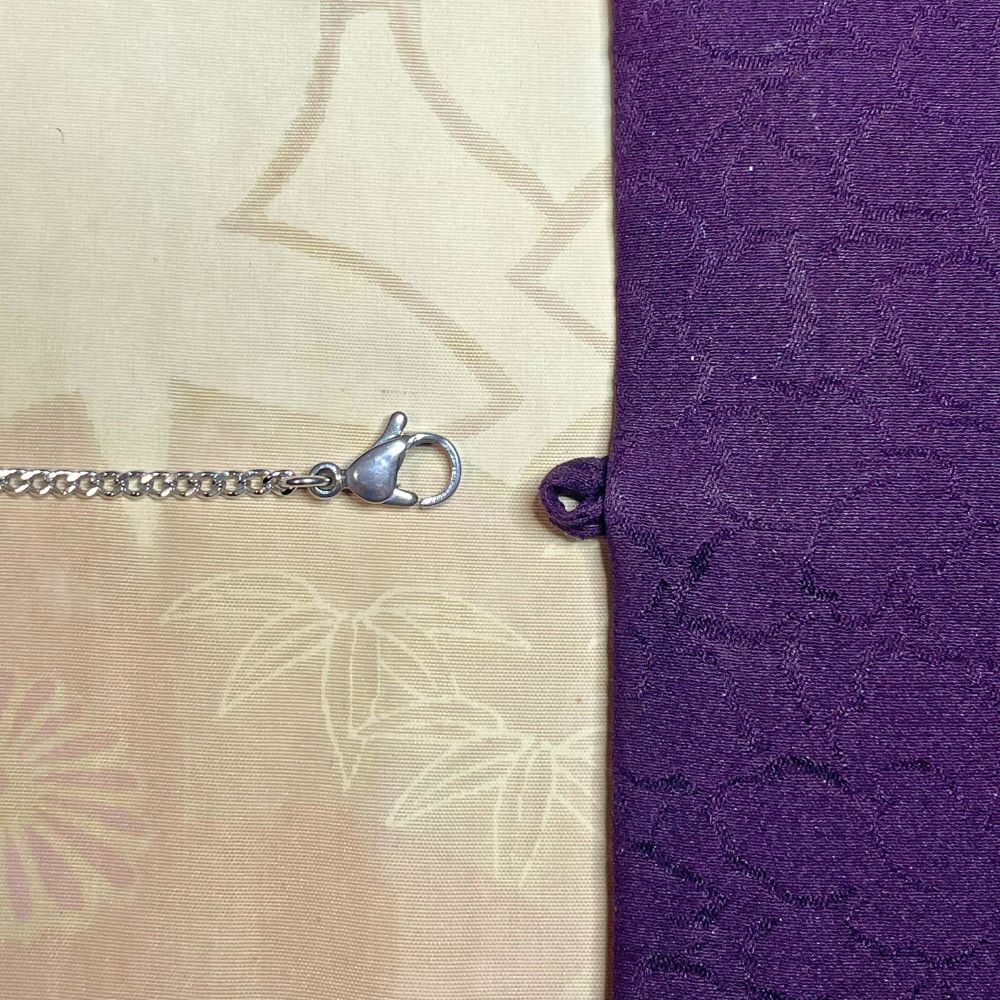
Attachment via S-hooks or lobster claw clasps
These styles lean more into jewelry aesthetics and are especially popular in modern kimono fashion and street styling.
Function: How Are Haori-himo Worn?
While attachment hardware may differ slightly, the overall process follows a natural flow.
Traditional (Kumihimo) Styles
1. Attach the wa to the chi.
To attach the haori-himo directly, pass the wa through the chi, then bring the opposite end of the cord through the wa and pull gently. This creates a lark’s head hitch — a secure but removable connection.
Alternatively, a small S-shaped hook may be used, connecting the wa to the chi for easier removal and interchange.
2. Tie the cords at the center front.
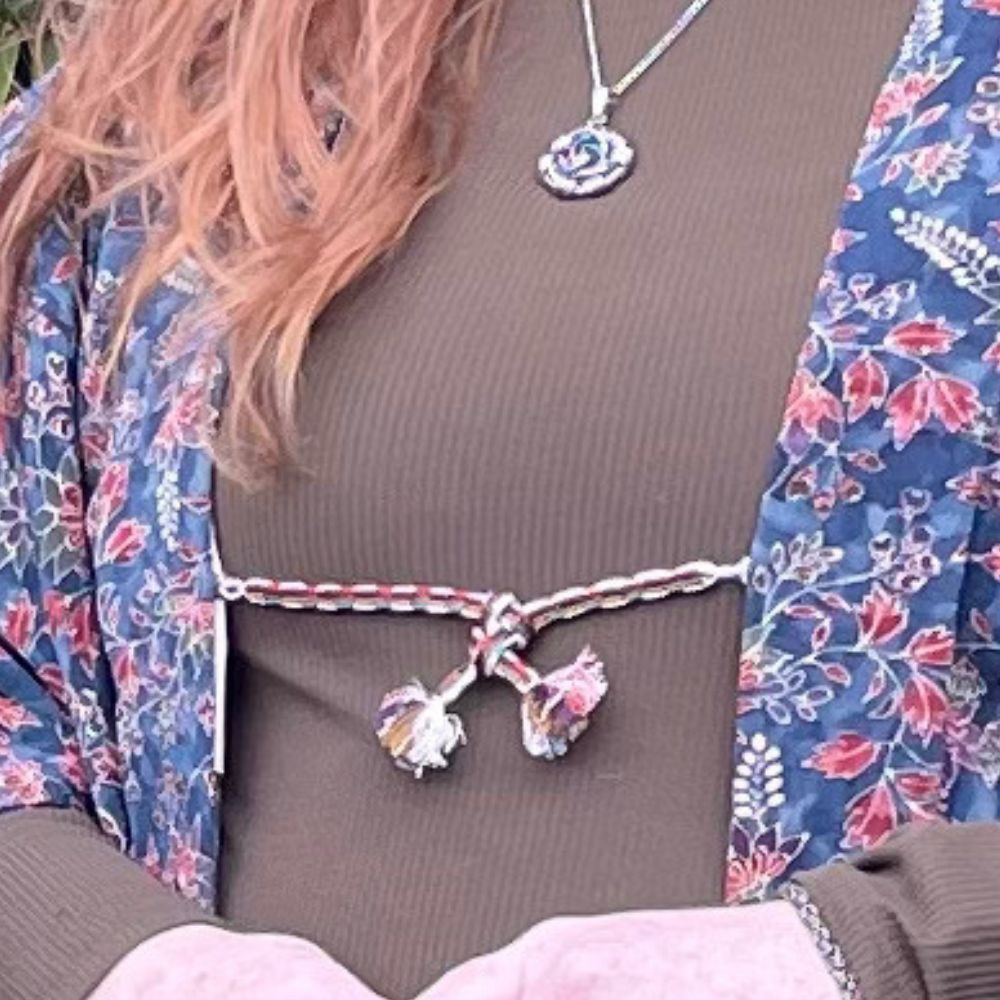
Bring the two braided cords together and tie them loosely at the midpoint of the chest. A simple, balanced knot is sufficient. The closure should be secure but never tight — the haori is meant to drape, not close firmly.
Modern (Chain) Styles
1. Attach each end to the chi.
Use the attached S-hooks or lobster claw clasps to secure each side of the haori-himo to the chi inside the haori collar. Unlike kumihimo styles, no tying is required.
2. Allow the center element to rest naturally.
Once attached, the chain or decorative centerpiece should sit evenly across the front of the body.
The haori-himo should sit with light tension — never pulling the haori tightly closed.
Fashion: Style and Expression
Without haori-himo, a haori may appear incomplete; they serve as a focal point. Some are understated and refined. Others function almost like jewelry.
They can:
Add contrast or harmony to a color palette
Introduce texture or shine
Bridge traditional and modern aesthetics
Serves as a small but powerful design detail
Highlight your personal style
Whether you prefer classic kumihimo or contemporary chain designs, haori-himo are a subtle but essential part of styling — functional, decorative, and endlessly adaptable.
Are Haori-himo Only for Haori?
Not at all.
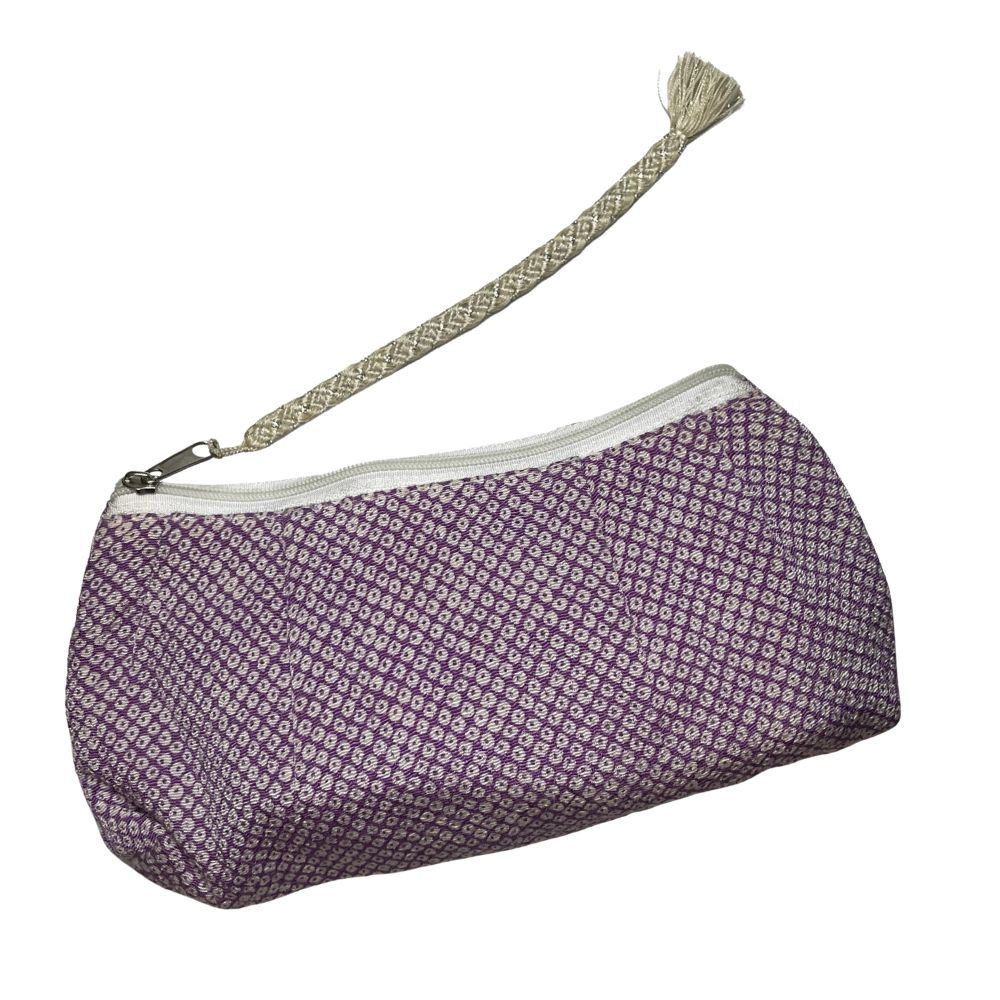
Haori-himo are surprisingly versatile. They can be repurposed as:
Zipper pulls
Bag charms
Bookmark tassels
Keychains
Hair accessories
and more!
Used beyond the haori, they become small statements of personal style — subtle, tactile, and intentional. In this way, haori-himo continue to express the craftsmanship and intentionality of traditional dress, even outside of it.
As both functional fasteners and decorative objects, they demonstrate how even the smallest elements of kimono dress are designed with purpose, adaptability, and lasting relevance. Whether worn traditionally or incorporated into modern accessories, haori-himo remains a detail that carries meaning as well as beauty.